The modern hvac company operates not merely as a service provider, but as an architect of atmospheric control, a merchant of manufactured climates in a world where comfort has become both commodity and necessity. In Singapore’s relentless heat, these enterprises wield the power to regulate breath itself, transforming sweat into profit through the precise manipulation of air, temperature, and moisture.
The Economics of Engineered Air
To understand the heating and cooling enterprise is to recognise a peculiar form of capitalism that trades in the invisible. These are not companies selling tangible goods, but rather dealers in environmental modification, a business model predicated on the fundamental human need for thermal comfort, whilst simultaneously creating dependency upon their technological interventions.
The numbers tell a stark story of market concentration and capital accumulation. The Singapore HVAC System Market size was valued at USD 904.1 million in 2023, and is predicted to reach USD 1620.2 million by 2030, at a CAGR of 8.1% from 2024 to 2030. This growth represents not merely business expansion, but the commodification of breathable air in an increasingly uninhabitable climate.
Corporate Consolidation and Market Domination
The climate control industry reveals itself as a theatre of corporate concentration, where multinational giants lead with extensive product portfolios and strong distribution networks, leveraging their expertise in energy-efficient technologies. These major players collectively hold over 46% market share.
This consolidation speaks to a deeper truth about thermal capitalism: that comfort itself has become subject to oligopolistic control. The air conditioning enterprise mirrors broader patterns of corporate dominance, where a handful of multinational entities determine the terms under which billions access breathable indoor environments.
Consider the stark mathematics of failure within this industry. 70% of new HVAC businesses fail in their first year of operation. This statistic illuminates the brutal reality faced by smaller air conditioning service providers attempting to compete against established multinational corporations with vast resources and distribution networks.
The Labour Question in Climate Control
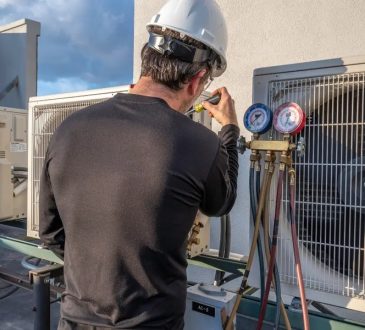
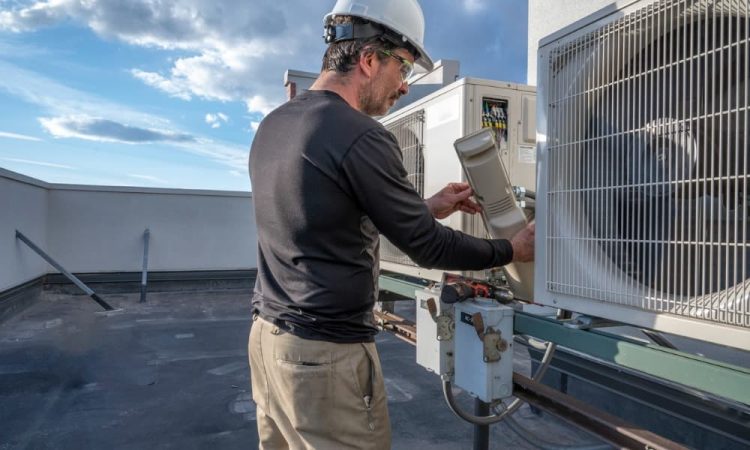
Behind every comfort delivery system lies a complex web of human labour, technicians, installers, and maintenance workers whose bodies bear the physical burden of ensuring others’ atmospheric comfort. The heating and cooling industry is facing a shortage of workers, with many switching careers or retiring. In 2025, the demand for skilled HVAC technicians will keep on climbing.
This shortage reveals the contradictions inherent in comfort capitalism: whilst demand for climate control services surges, the industry struggles to attract and retain the skilled workers essential to its operation. The gap between corporate profits and worker conditions becomes apparent in this scarcity of technical expertise.
Regulatory Capture and Compliance Costs
The air conditioning industry operates within a complex regulatory framework that often serves established players while creating barriers for smaller competitors. Key challenges are the high raw materials costs & regulatory compliance associated with HVAC systems.
This regulatory environment creates what economists term “barriers to entry”, obstacles that protect existing market leaders whilst preventing new entrants from challenging established hierarchies. For smaller enterprises or those with limited resources, navigating this intricate regulatory landscape can be particularly daunting, potentially impeding their market entry or expansion.
The result is a form of regulatory capture where compliance costs effectively exclude smaller operators, concentrating market power amongst established multinational heating and cooling enterprises.
Local Resistance and Niche Strategies
Yet within this landscape of corporate dominance, spaces for resistance emerge. Local enterprises are carving out niches by offering tailored solutions for small and medium enterprises, focusing on affordability and quick maintenance.
These regional climate control providers represent alternative models of business organisation, entities that prioritise community needs over shareholder returns, affordability over profit maximisation. They demonstrate that other forms of air conditioning service are possible, even within capitalist frameworks.
The Service Economy’s Hidden Architecture
The true power of climate engineering companies lies not in equipment sales, but in ongoing service relationships. The market also sees intense competition in after-sales services, with over 500 authorised service providers registered as of 2024, according to industry directories.
This service-centric model creates perpetual revenue streams whilst establishing long-term dependencies between customers and air conditioning service providers. Maintenance contracts become instruments of ongoing extraction, transforming one-time purchases into lifetime relationships of financial obligation.
Future Trajectories and Systemic Questions
The trajectory of heating and cooling enterprises illuminates broader questions about sustainability, inequality, and technological dependence. As climate change intensifies demand for artificial cooling, these companies find themselves simultaneously profiting from and contributing to the very environmental crisis that drives their market expansion.
The fundamental question remains: can climate control service providers evolve beyond their current model of commodified comfort towards systems that serve human needs without perpetuating environmental destruction or economic inequality?
In examining the air conditioning industry, we confront uncomfortable truths about modern capitalism’s relationship with basic human needs. These enterprises reveal how even essential services like breathable air become subject to market logics, corporate control, and profit extraction, making every HVAC company both a solution to and a symptom of our contemporary climate predicament.